Humpback Whale Facts: Giants of the Ocean You Need to Know
“`html
Humpback Whale: Gentle Giants of the Ocean
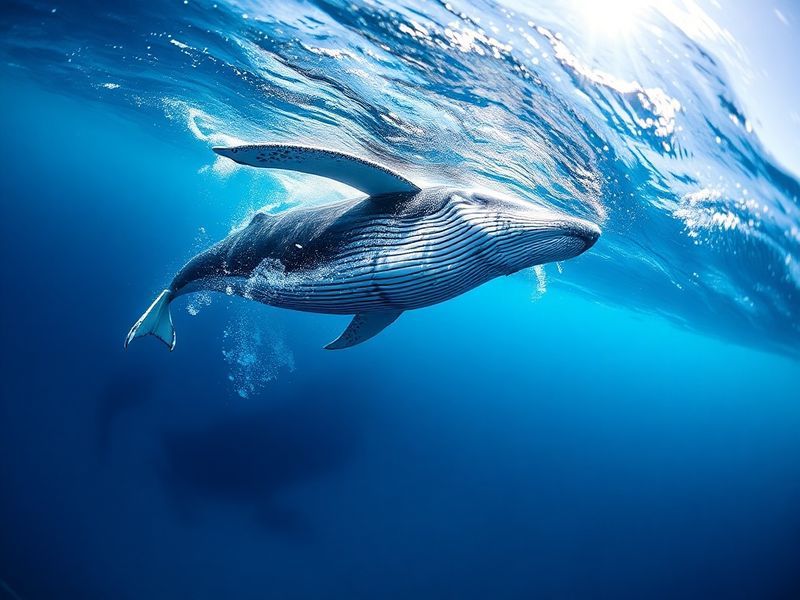
The humpback whale (Megaptera novaeangliae) is one of the most recognizable marine mammals, known for its acrobatic breaches, haunting songs, and complex social behaviors. These baleen whales can grow up to 52 feet long and weigh up to 40 tons, making them true oceanic titans. Yet despite their massive size, humpbacks are surprisingly agile, often seen leaping out of the water or slapping their fins and tails in dramatic displays.
Found in oceans worldwide, humpbacks undertake some of the longest migrations of any mammal, traveling up to 5,000 miles between feeding and breeding grounds. Their annual journeys are a testament to their resilience and adaptability, navigating vast stretches of open ocean with precision. Understanding these migrations has become a key focus for marine biologists studying climate change and ocean health.
The Life Cycle and Mating Rituals of Humpback Whales
Humpback whales begin their lives in warm, tropical waters where females give birth to a single calf after a gestation period of about 11 months. Calves are born weighing around 1,500 pounds and measuring 10-15 feet in length. They rely entirely on their mother’s milk for the first year of life, gaining up to 100 pounds per day. This rapid growth is essential for surviving the long migration back to colder feeding grounds.
Mating season is a spectacle of competition and song. Males produce intricate vocalizations known as “songs,” which can last up to 20 minutes and be repeated for hours. These songs are believed to play a role in attracting females and asserting dominance over rival males. The most dominant males often secure mating rights, though the process is not without conflict. In some cases, males have been observed physically competing for access to females, using their massive bodies to block or challenge rivals.
Females typically give birth every two to three years, a relatively slow reproductive cycle that makes population recovery a slow process. This low birth rate, combined with historical whaling pressures, has made conservation efforts critical for humpback whale populations.
The Humpback’s Unique Feeding Techniques
Humpback whales are baleen whales, meaning they filter feed using comb-like structures in their mouths to strain krill and small fish from the water. What sets them apart is their innovative feeding techniques, including bubble net feeding—a cooperative hunting strategy used by groups of whales. Here’s how it works:
- Circle and Blow: A group of whales swims in a circular pattern below a school of fish, releasing bubbles from their blowholes. The bubbles form a cylindrical “net” that traps the fish.
- Ascend and Feast: The whales then swim upward through the center of the bubble net, mouths agape, engulfing large quantities of fish and krill in a single gulp.
- Teamwork: This method requires precise coordination among the whales, showcasing their intelligence and social bonds. Some groups even assign specific roles, such as bubble-blowers and fish-herders.
Bubble net feeding is not only a testament to the humpback’s intelligence but also a remarkable example of animal cooperation. Researchers have observed pods refining their techniques over time, suggesting cultural learning within whale communities. This behavior has been documented in regions like Alaska’s Inside Passage and the Gulf of Maine, where humpbacks rely on dense concentrations of prey.
In addition to bubble net feeding, humpbacks employ a technique called “lunge feeding,” where they accelerate toward a school of fish with their mouths wide open, engulfing water and prey before filtering it through their baleen plates. This method is energy-intensive but highly effective for capturing fast-moving schools of herring or sand lance.
Conservation Status and Human Impact
Humpback whales were once hunted to the brink of extinction during the commercial whaling era. By the mid-20th century, their populations had plummeted to an estimated 5,000 individuals worldwide. The International Whaling Commission (IWC) imposed a moratorium on humpback whaling in 1966, which allowed populations to gradually recover. Today, humpbacks are listed as “Least Concern” by the IUCN, though some regional populations remain endangered.
Despite this progress, humpbacks face new threats in the modern era. Ship strikes, entanglement in fishing gear, and habitat degradation due to climate change are among the most pressing challenges. In the United States, the National Oceanic and Atmospheric Administration (NOAA) has designated several humpback populations as endangered under the Endangered Species Act, highlighting the need for continued protection.
Efforts to reduce ship strikes include rerouting shipping lanes in critical habitats, such as off the coast of California and the Hawaiian Islands. Meanwhile, organizations like Dave’s Locker Science are working to document whale migration patterns and advocate for policies that minimize human impact on these gentle giants.
Another major concern is the impact of ocean noise pollution. Humpbacks rely on sound for communication, navigation, and finding prey. Underwater noise from shipping, sonar, and offshore drilling can disrupt these activities, leading to stress and disorientation. Researchers are studying ways to mitigate these effects, such as implementing quieter ship designs and establishing marine protected areas.
The Cultural Significance of Humpback Whales
Humpback whales hold a special place in human culture, inspiring awe and reverence across civilizations. Indigenous communities, such as the Inuit and Native Hawaiians, have long revered whales as spiritual beings. In Hawaiian culture, humpbacks are known as “koholā,” and their annual arrival in the islands is celebrated as a sign of abundance and harmony. Whale-watching tours in Hawaii and Alaska have become a major economic driver, attracting millions of visitors each year.
Their haunting songs have also captivated musicians and artists. The composer Alan Hovhaness created a symphony inspired by humpback vocalizations, while naturalist recordings of whale songs have topped music charts. These recordings, popularized in the 1970s by biologist Roger Payne, brought humpback whales into the public consciousness and sparked early conservation movements.
In literature and film, humpbacks often symbolize the mystery and majesty of the natural world. Films like Free Willy and documentaries such as Song of the Whale have further cemented their place in popular culture, blending entertainment with messages of environmental stewardship.
How to Support Humpback Whale Conservation
Protecting humpback whales requires a combination of policy advocacy, scientific research, and public engagement. Here are some ways individuals can contribute to their conservation:
- Reduce Plastic Use: Microplastics and marine debris can harm whales by contaminating their food sources or causing entanglement. Opting for reusable products and participating in beach cleanups can make a difference.
- Support Sustainable Seafood: Overfishing can deplete the krill and fish populations that humpbacks depend on. Choosing seafood certified by organizations like the Marine Stewardship Council ensures sustainable fishing practices.
- Advocate for Marine Protected Areas: Encourage policymakers to designate critical habitats as protected zones where whales can feed and breed without human interference.
- Participate in Citizen Science: Programs like Dave’s Locker Education allow volunteers to report whale sightings, contributing to research efforts.
- Educate Others: Share knowledge about humpback whales and their conservation needs. Awareness is the first step toward meaningful action.
The future of humpback whales depends on our collective efforts to address the challenges they face. From reducing ocean noise to combating climate change, every action counts. By protecting these magnificent creatures, we also safeguard the health of our oceans—a shared responsibility that transcends borders and species.
The humpback whale’s story is one of resilience and adaptation, a reminder of nature’s ability to recover when given the chance. As we continue to learn from these gentle giants, we are reminded of our own role as stewards of the planet. Their survival is not just a scientific concern but a moral imperative, one that challenges us to rethink our relationship with the natural world.