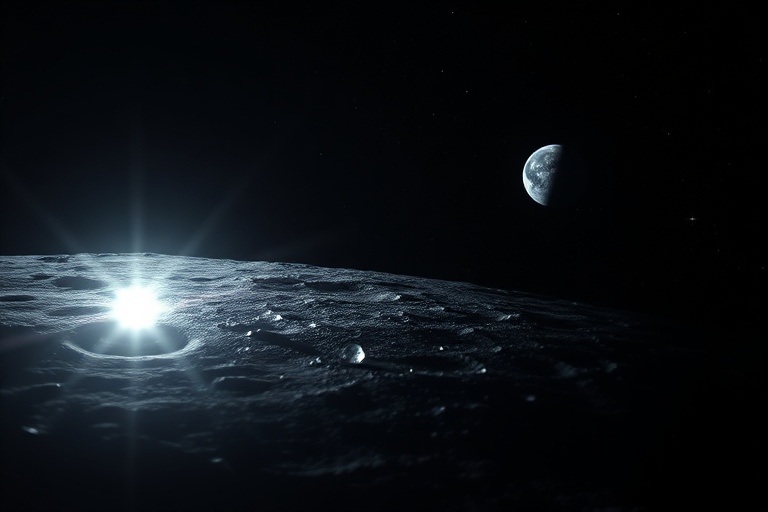
Lunar Impact Flashes: NASA Artemis Mission’s Key to Moon Mysteries
The Artemis program represents humanity’s boldest return to the lunar surface since Apollo. Beyond landing astronauts near the Moon’s south pole, NASA’s initiative includes scientific instruments designed to study phenomena that have fascinated astronomers for decades—lunar impact flashes. These brief, luminous events occur when meteoroids collide with the Moon’s surface, providing unique insights into both space debris and the Moon’s geological history.
The frequency of these impacts has increased interest among planetary scientists. Unlike Earth, the Moon lacks an atmosphere to burn up incoming space rocks. Every day, thousands of meteoroids strike its surface, creating flashes detectable with specialized telescopes. Artemis’ monitoring systems could transform these fleeting moments into valuable data about the solar system’s dynamic environment.
Why Lunar Impact Flashes Matter for Space Exploration
Understanding lunar impact flashes serves multiple scientific purposes. First, they reveal the rate at which meteoroids enter the Earth-Moon system. This data helps astronomers refine models predicting potential Earth impacts, which could inform planetary defense strategies. Second, studying these flashes provides clues about the Moon’s internal structure. The energy released during impacts sends seismic waves through the lunar crust, which future Artemis missions could measure using seismometers.
The Moon’s surface, unprotected by erosion or geological activity, preserves a record of billions of years of cosmic collisions. Each impact flash is effectively a time capsule, offering indirect evidence about the size, velocity, and composition of past meteoroid populations. By correlating these observations with lunar samples returned by Apollo missions, researchers hope to piece together a more complete picture of the solar system’s evolution.
- Planetary defense: Tracking meteoroid populations near Earth and the Moon helps assess risks to satellites and future habitats.
- Lunar geology: Impact flashes can indicate subsurface structures, such as buried craters or volcanic deposits.
- Resource mapping: Identifying fresh impact sites may reveal locations where water ice or other volatiles are exposed near the surface.
- Mission planning: Understanding impact rates helps engineers design landing systems and habitats that can withstand micrometeoroid strikes.
NASA’s Tools for Capturing Lunar Impact Data
Artemis missions will deploy advanced observational tools to detect and analyze lunar impact flashes. The Lunar Reconnaissance Orbiter (LRO), already in orbit, has captured thousands of these events using its Narrow Angle Camera. However, Artemis missions will bring new capabilities closer to the surface. Astronauts may deploy portable telescopes or assist in real-time observations using onboard instruments.
One key instrument is the Near-Infrared Camera (NIRCam) aboard the Lunar Gateway, a planned space station orbiting the Moon. This instrument will monitor the lunar night side, where impact flashes are most visible against the dark surface. Additionally, ground-based observatories, including those operated by NASA’s Lunar Impact Monitoring Program, will provide complementary data. These telescopes automatically scan the Moon nightly, capturing high-resolution videos of impact events.
Artemis astronauts will also participate in citizen science efforts. Using handheld cameras or specialized equipment, crew members can document flashes during lunar night periods. These observations, when combined with orbital data, create a more comprehensive dataset. The European Space Agency (ESA) is developing similar programs, fostering international collaboration in lunar impact research.
Challenges and Future Directions in Impact Flash Research
Despite technological advances, studying lunar impact flashes presents significant challenges. The Moon’s slow rotation means some regions remain in darkness for extended periods, limiting observation windows. Additionally, distinguishing genuine impact flashes from cosmic rays or satellite glints requires sophisticated software and cross-verification with multiple data sources.
Another hurdle is the Moon’s dynamic environment. Lunar dust, or regolith, can scatter light and obscure faint flashes. Future missions may incorporate hyperspectral imaging to filter out noise and isolate impact signatures. NASA’s Commercial Lunar Payload Services (CLPS) program is funding small landers equipped with dust-mitigation technologies, which could improve observational clarity.
Long-term goals include establishing a dedicated lunar impact monitoring network. This system would consist of multiple sensors deployed across the Moon’s surface, providing continuous coverage. Such a network could operate autonomously, sending alerts to Earth when significant events occur. Researchers also envision integrating impact flash data with lunar weather stations, which monitor electrostatic activity in the regolith—a potential hazard for future explorers.
Artemis and the Broader Context of Lunar Science
The Artemis program is not just about returning humans to the Moon; it’s about building a sustainable presence that advances scientific knowledge. Lunar impact flashes are just one piece of this puzzle. By studying these events, NASA and its partners aim to answer fundamental questions about the Moon’s origin, its relationship with Earth, and the risks posed by space debris.
This research also supports broader goals, such as the search for water ice in permanently shadowed craters. Impact flashes can expose subsurface materials, including volatiles that may be crucial for future lunar bases. Additionally, understanding the frequency and energy of meteoroid impacts will inform the design of habitats and infrastructure, ensuring they can withstand the harsh lunar environment.
For enthusiasts and researchers alike, lunar impact flashes represent a dynamic intersection of astronomy, planetary science, and human exploration. As Artemis missions unfold, the data collected will not only enhance our understanding of the Moon but also pave the way for deeper space exploration. The flashes may be brief, but their implications are profound.
To learn more about NASA’s lunar exploration efforts, visit our Science and Technology category pages for curated updates on space missions and discoveries.